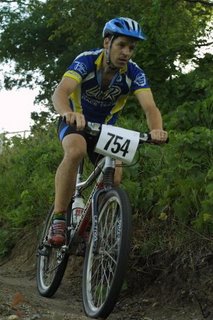
Lactate Threshold Training
By Ken Mierke (the sport factory)
Whenever an athlete exercises at any intensity, even walking, lactic acid (lactate) is constantly being produced. Fortunately, our bodies also constantly recycle lactate, actually burning it up for fuel. As intensity increases, lactate production also increases. Lactate threshold is the highest intensity at which an athlete recycles lactate as quickly as it is produced, so that lactate does not accumulate. Muscle and blood levels of lactate are moderately high at lactate threshold intensity, but do not increase over time.
Lactate threshold training, in the right doses at the right time, is important for almost every road cyclist, mountain biker, and triathlete. For many athletes training for a variety of different events, lactate threshold training has the best cost to benefit ratio of any type of training. This intensity is high enough to stimulate adaptations which dramatically increase speed-endurance, but because lactate is not accumulating, damage to the muscles and blood vessels is minimal and the recovery cost of the workout, if conducted properly, is modest.
Increasing lactate threshold is one key goal of training for athletes racing in events lasting from thirty minutes to five hours. Raising lactate threshold enables an athlete to race more effectively at intensities significantly below lactate threshold, near lactate threshold, and above lactate threshold.
Most athletes and coaches overestimate lactate threshold intensity. This creates a major problem, either limiting potential training volume at lactate threshold or inducing overtraining. Training one percent over lactate threshold, at an intensity at which lactate accumulates slowly, causes much greater damage and requires much greater recovery time than the same duration at lactate threshold. This intensity, for a twenty to thirty minute segment, does not feel that much harder. Lactate accumulates slowly, but continually. Five minutes into the segment, lactate levels in the muscles and in the blood will be only slightly higher, but later in a long set they may be dramatically higher. An athlete with a lactate threshold of 350 watts and blood lactate of 4.2 mmol/L may reach lactate levels 50% greater after a 20 minute segment at 370 watts.
For most well-trained athletes, lactate threshold intensity correlates well with about CP75 wattage or speed. Be careful using CP60 because lactate accumulates at this intensity and because athletes don't understand the cost of going one or two percent too hard and coaches don't always get perfect compliance with the programs they design. Always remember that what happens on the roads and trails is more important than what we write on the schedule.
I find that most athletes can absorb relatively high volumes of LT training when intensity is carefully controlled not to exceed LT. I have also found that almost every athlete, at LT intensity, feels that they are not going hard enough.
Muscle Fiber Recruitment
Every muscle in an athlete's body is composed of many thousands of muscle fibers. When the muscle contracts, each fiber either contracts with its full force capability, or remains relaxed. When I pick up a one pound dumbbell, very few fibers are required to contract, but those that do contract just as powerfully as when I pick up a seventy pound dumbbell.
After aerobic plateau, which requires several minutes at the beginning of each workout or each shift in intensity during a workout, the athlete's body will recruit muscle fibers according to the power or speed requirement of the activity. The slow twitch fibers, because of their great endurance, will be recruited first. At low intensity only a few ST fibers will be recruited and the rest of the ST fibers, all the FOG fibers and all the FT fibers remain relaxed. As intensity increases, some of the FOG fibers will be recruited and then finally the FT fibers. At lactate threshold intensity, the power or speed requires the athlete's body to recruit all of the FOG fibers, but not yet any of the FT fibers.
At LT intensity, the FOG fibers create a lot of lactate, but only at a rate at which the ST fibers can burn it up and use it for fuel. Sustaining this intensity trains the FOG fibers to work more aerobically so that they produce less acid and trains the ST fibers to burn more acid, both of which push the threshold to a higher wattage or speed.
LT training is the only effective endurance training for the FOG fibers. At lower intensities they are not recruited. At higher intensities, FT fibers are recruited causing lactate to accumulate. Sustaining the intensity for an extended duration uses resources unnecessarily � demanding tremendous psychological motivation and dramatically delaying recovery.
Using LT Training
There are two basic formats for LT training, cruise intervals and tempo segments. Cruise intervals are four to six minute segments at lactate threshold with one or two minute recoveries. These are very effective for introducing higher intensity training during late base periods. The recovery cost of cruise intervals is relatively light and the damage of riding slightly above LT intensity not as great.
Relatively long tempo segments are the core of LT training. I generally give my athletes two intensity zones for LT training.
High zone 4 is right at to slightly below LT. The athlete will sustain heart rate approximately 0-4 beats below LT and will sustain wattage or speed within three to five percent of LT. I generally use twelve to twenty minute segments at this intensity to increase power or speed at LT.
Low zone 4 is somewhat below LT. The athlete will sustain hear rate approximately 5-8 beats below LT, with wattage or speed about five to seven percent below LT. At this intensity, most of the FOG fibers are still recruited, but there is a safety zone against lactate accumulation. I have athletes perform tempo segments of twenty minutes all the way up to an hour at this intensity. Training at this intensity increases the endurance of the FOG fibers, enabling the athlete to sustain LT wattage or speed longer. I believe that this is an incredibly efficient training intensity. The cost, in terms of recovery for tomorrow's workout as well as the psychological costs, are relatively low. Most athletes enjoy this training and, prescribing very long sets may increase compliance with intensity. If I'm doing a forty minute segment, it is not so tempting to want to blast.
Every athlete likes to think that they are more motivated than the rest. They will train harder, be more consistent and more disciplined. Coaches like to think the same about their clients. Remember though, no matter how passionate and motivated the client is, this is a finite resource. Budget it wisely. Correct use of LT training, generally a little on the conservative side, plays a big role in sustaining motivation.
Implementing LT Workouts
Educate your athletes about the value of maintaining appropriate intensity. Make sure they understand that they are not sustaining 171 to 177 beats per minute so that they can finish the forty minute segment, but because that intensity produces the best results. As Joe says, �The least amount of work which will produce the desired results.� Remember the tendency of the athlete to want to go as hard as possible for whatever the duration is.
High, steady power or speed production is the key factor in LT training. Long steady bike segments generally need to be conducted in flat to rolling terrain unless the athlete is fortunate enough to live where long, steady climbs are available. Encourage your athletes to push harder than they think they need to on descents. Many riders with new power-meters are shocked at how little wattage they produce when they feel like they are pedaling relatively hard on descents. At the same time, exceeding LT power on uphills is natural, but not beneficial.
Indoor trainers provide a fantastic venue for LT training, but athletes vary dramatically on the psychological cost of these workouts. Some love it. For others this can be a great way to make them hate their bikes. I generally will use cruise intervals on a trainer more than steady segments because I like to keep the athlete's mind moving while riding on a trainer.
Group rides (for road cyclists) are generally not the best venue for LT training. Group rides tend to deteriorate into informal races, and those workouts certainly have their place. Getting a road cyclist to do a single weekly LT workout by himself may be the second greatest contribution a coach can make to his training (recovery weeks are #1). This will depend on the group and the athlete. A very strong and very disciplined athlete may be able to pull this off on some rides, but be careful. The right rider can even do this in a training race, going to the front and pulling for a certain number of minutes, before sitting in the pack to the finish. Still, for most riders, doing these workouts by themselves or with one or two partners who will cooperate with the intent of the workout is a better bet.
Depending on location, mountain bike riding is generally not the best implementation of LT training. One of my clients agrees to drive a four hour round trip to a thirty minute off-road climb that he does weekly during his build periods. Staying off his road bike for these twelve workouts is worth forty-eight hours in his car. Lots of serious mountain bikers hate their road bikes, but in many regions, finding long, steady off-road climbs is impossible. Mountain bikers tend even more to be outdoors people and many hate indoor trainers even more than road bikes, so the idea of a trainer LT workout on their mountain bike isn't often appealing (though the threat of that may make the road bike less horrible!).
Race Duration
Improving lactate threshold speed and endurance are primary goals of preparing for races between thirty minutes and five hours in duration. The FOG fibers will produce a significant percentage of the athlete's power or speed at these distances, and lactate accumulation in the muscles is likely to be the factor that limits performance.
LT training is still one important piece in events that are shorter or longer. Even though training the FT fibers will be critical, the FOG fibers still play an important role in events under thirty minutes duration.
Even though the ST fibers produce a huge majority of the energy to race an ironman and the FOG fibers will not be recruited for sustained durations, LT training (especially very long segments at the lower end) maximizes glycogen storage and vascularity as well as increasing central adaptations such as stroke volume.
The reality is that most athletes, at some point in an ironman, exceed aerobic threshold intensity and recruit the FOG fibers for moderate durations. Athletes will likely recruit the FOG fibers on a particularly steep hill even if they are disciplined and pace appropriately, so we do want these fibers trained even though they are relaxed for much of the race's duration. While training the ST fibers at AeT intensity should always be the priority in preparation for ironman and longer races, LT training, on the conservative end, still has value.
Type of Race
LT training is highest priority for time-trials, road races mountain bike races, and triathlons which feature long segments with high, steady power output, but increasing LT will help with any type of race of significant duration.
AT CP6 intensity, the FOG fibers generally expend about 30% of the energy, so even for a road race with several brutal climbs that are likely to determine the outcome, a mountain bike race with repeated short climbs, a criterium, or a hilly triathlon, increasing LT is vital to optimal performance. I often tell your road cycling clients who are gung-ho about very high intensity training, �I'd hate to see you win the field sprint for 17th!� Even in events won with a 1300 watt sprint, a high LT enables the athlete to arrive at the finishing stretch in a position to be able to use that sprint and with legs that are still able to sprint strongly.
Include LT training in appropriate volumes at appropriate times of the season. Learn each athlete, because the volume of LT training that can be absorbed and adapted to varies dramatically. This type of training is not the end-all and the be-all of endurance training, but it is one very efficient means of stimulating adaptations that will make our athletes stronger without beating them up or interfering with other workouts.
4/07/2008


Weights???
original
CYCLING PERFORMANCE TIPS
WEIGHT TRAININGCycling regularly is great for lower body strength, but leaves a lot to be desired for the upper body muscle groups. And this can be a major liability - both for roadies who need that extra edge in road competitions and for mountain bikers who need this upper body strength to lift, jump, or just plain muscle heavier bikes over rough terrain and obstacles.
A reasonable approach is to focus on building strength (not bulk) in the winter and then backing off to just maintain it during the peak riding season. Strength from the weight room will help with on the bike performance, but 3 sets of leg presses at 400 pounds is different from the riding demands of roughly 30,000 pedal strokes during a century. When you're riding, resistance is in the range of 10-40 pounds per pedal revolution. So for the riding season you need to convert that weight-room strength to cycling-specific power with intervals, training time trials, and hill work.
WHY "MUSCLE UP"?
1.The upper body, including abdominal muscles, is an integral part of the pedal stroke. A strong torso provides the rigidity to deliver maximum power from the quads to the pedal. On a level stretch, a strong rider will barely move their upper body while those who are tiring will rock their pelvis on the saddle. And watch a group of road riders in a sprint or a technical single track rider pulling and rocking their shoulders and handlebars. This motion actually levers the bike, adding to the power of their legs on the pedals.
2. Muscle strength in the quads and legs can mean the difference between walking and riding up a short (10 to 15 pedal stroke) hill.
3. A strong upper body gives additional protection for those falls that are part of the sport.
4. Muscle strength and endurance help prevent the fatigue of the constant jarring and correction that are part of a long descent - and in turn this freshness helps to maintain sharp reflexes and technical
RECOMMENDED EXERCISE PLANS
There are two approaches to resistance or weight training. The first is the "keep it simple" approach one can put together at home and on the bike, and the other is the more "traditional" using free weights. Both should be done 3 times a week (2 times at a minimum) to maximize benefits.
Most coaches recommend a program of strength building (higher weights, fewer reps) in the winter and then a shift to lower weights (perhaps 50% max) and more reps (3 sets, 50% max.weight, 25 reps OR 2 sets, 25% max.weight, 50 reps) as the cycling season approaches to mimic the ways you use your muscles on the bike and to decrease the possibility of injuries.
The following idea builds on the concept of transitioning from a pure muscle building program to one that mimics how you use those muscles on the bike. Do a 3 - 5 minute "muscle reeducation" on the spin cycle after lifting. This stresses the muscles and then uses a sport specific task to coordinate the firing patterns of the muscle cells. The same concept is being applied when a coach uses a medicine ball to encourage new firing patterns.
KEEP IT SIMPLE (i.e. you don't have free weights available)
Shift down 2 cogs on your bike during a long endurance ride, and concentrate on pushing and pulling through the pedal stroke at 60 - 80 RPM for 30 seconds. Repeat 6 times. A second set can be done after a 5 minute rest. An alternative to squats.
Dips on the back of two sturdy chairs.
Crunchers for the abs and low back.
Push-ups. TRADITIONAL
Upright rowing - strengthen deltoid and shoulder for extra protection in a fall.
Pull up - reproduces the pulling up you use on a steep uphill.
Squats - upper thigh parallel to the ground-for that quad strength for steep climbs.
Bent over rowing - to stabilize the handlebars when pedaling hard.
Step ups on a platform with weight on shoulders - one leg at a time-for quad strength.
Push ups - mimics the push on the handlebars used during technical rides through dips and on uneven terrain. COMMON WEIGHT TRAINING MYTHS
1) You have to lift extrememly heavy weights to increase muscle size. Not so. Competitive body builders, whose success depends on muscle size, work with only moderately heavy loads using multiple sets of up to 12 lifts per set. The chance of injury with extremely heavy weights outweighs their benefits.
2) You can sculpt your body by using multiple reps with light weights. Up to a point this is true. But anything more than 15 reps per set offers little benefit.
3) The up side of a lift is more important than the return side. The up side, when you actually lift a weight, is called the concentric phase. The return, when you allow the weight to return to its starting point,is the eccentric phase. While both are important, there is evidence that the eccentric phase may actually have more impact on developing muscle strength. It is recommended that you lift with a two count and return to the starting postion with a four count.
4) Abdominal crunches will build up your back muscles. While crunches will strenghten abdominal muscles and protect your back, back extensions are needed to strenghten the spinal erector muscles.
5) Weight lifting increases aerobic capacity. Although a rider that is in better shape might ride more efficiently and thus for longer periods at any speed, there is no evidence that weight training will increase your VO2max or AT/LT. That's not to say that you can't add aerobic work to a weight session however. Aside from the warm-up it can be helpful to incorporate two or three "spin-bike", ergometer or stair-master aerobic "breaks" between standard exercises. These aerobic sessions should be limited to 3 to 5 minutes each so as not to detract from the core exercises (squats, toe raises, leg extensions, ab work, etc).
BUT WILL WEIGHTS INCREASE MY PERFORMANCE?
Even though most coaches include weight training in their programs, there is controversy on this point - particularly as to the usefulness of weights during the cycling season.
Lance Armstrong's coach, Chris Carmichael, recommends building leg strength with low repetitions and heavy weights in the winter, then switching to the bike for high-repetition power work in the form of intervals up steep hills. But cycling physician and trainer Max Testa says to begin the winter with 3-4 sets of 12-18 reps with medium resistance, then progress to 3 sets of 25 reps followed by 2 sets of 50 reps with light weights. Testa's reason for high-repetition/low resistance leg training: "When you pedal you use a very small percentage of maximum strength on each pedal stroke."
The moral? The physiological law of specificity can't be avoided. Weight-room strength has to be converted to cycling-specific fitness before it's of much use on the bike.
The following article also suggests that any benefits are minimal, at least for endurance performance. BISHOP, D., D. G. JENKINS, L. T. MACKINNON, M. MCENIERY, and M. F. CAREY. The effects of strength training on endurance performance and muscle characteristics. Med. Sci. Sports Exerc., Vol. 31, No. 6, pp. 886-891, 1999
Purpose: The purpose of this study was to determine the effects of resistance training on endurance performance and selected muscle characteristics of female cyclists.
Methods: Twenty-one endurance-trained, female cyclists, aged 18-42 yr, were randomly assigned to either a resistance training (RT; N = 14) or a control group (CON; N = 7). Resistance training (2×·wk-1) consisted of five sets to failure (2-8 RM) of parallel squats for 12 wk. Before and immediately after the resistance-training period, all subjects completed an incremental cycle test to allow determination of both their lactate threshold (LT) and peak oxygen consumption V(dot)O2). In addition, endurance performance was assessed by average power output during a 1-h cycle test (OHT), and leg strength was measured by recording the subject's one repetition maximum (1 RM) concentric squat. Before and after the 12-wk training program, resting muscle was sampled by needle biopsy from m. vastus lateralis and analyzed for fiber type diameter, fiber type percentage, and the activities of 2-oxoglutarate dehydrogenase and phosphofructokinase.
Results: After the resistance training program, there was a significant increase in 1 RM concentric squat strength for RT (35.9%) but not for CON (3.7%) (P <> 0.05).
Conclusion: The present data suggest that increased leg strength does not improve cycle ENDURANCE performance in endurance-trained, female cyclists.
But there is another, often overlooked, benefit of weight training. We're discovering that cycling may contribute to bone loss in both men and women because it's not a weight-bearing activity. So cyclists should crosstrain for bone health. Weight training and jumping (like rope skipping) are helpful.
FURTHER INFORMATION
For those of you interested in further leads in pursuing weight conditioning, I'd suggest the web site of The National Strength and Conditioning Association.
Return to CYCLING PERFORMANCE TIPS
Homepage Table of Contents
No Weights MTB Training
No Gym, No Problem Mountain Bike Strength Training
Real Bodyweight Training for Mountain Bikers - Day 1
From James Wilson, for About.com
See More About:
bike training
bodyweight training
strength training
mtb strength training system
Bodyweight training is a very effective and efficient way for mountain bikers to add strength training into their programs. It is convenient since it can be done anywhere and with minimal equipment and offers several benefits beyond simply making you stronger. Unfortunately, though, most riders only think of push ups, pull ups and some crunches when the words “bodyweight exercises” are mentioned. While these exercises are fine, they are only the tip of the iceberg when it comes to this type of training.
When challenging exercises and variations are used, bodyweight training is very effective for building real strength. Remember that anything done for more than 6-8 reps in a set is not truly building strength. At that point you are instead starting to build up muscle and short term strength endurance. As mountain bikers it is not usually the endurance that we need to work on with strength training since we get that on the bike, instead it is raw strength that needs to be increased.
Bodyweight training also offers the added benefit of increasing our body awareness and control. As mountain bikers, these attributes are extremely important for us as we try to increase our skill level. As my friend and popular skills coach Gene Hamilton has pointed out, it is amazing how many people in his camps simply do not know where they are in space in relation to their bike. This makes learning the new skills he is trying to teach them difficult to pick up since they do not know how to control their body and bike as they need to. This also increases the likelihood of crashing since they do not know how to “stay loose” and flow when things get a little hairy, which is an inevitable thing if you ride actual trails instead of just spinning on fire roads.
So, considering the extra strength, body control and increased skill and safety aspects, every mountain biker should be incorporating a good strength training program with an emphasis on bodyweight type movements. Although there are a lot of other great tools that can vastly expand the exercise choices (such as a Swiss ball or pull up bar) I am going to keep this routine simple by using exercises that require no other equipment besides a chair. That way everyone who reads this can start incorporating this routine today instead of having to wait until they can get out and pick up something extra. This also makes it a great routine to use on the road when you do not have access to extra equipment.
Before I get into the workout itself I need to explain how to read it. This 2 day workout will consist of 8 exercises each day, and each exercise will be paired with another exercise resulting in 4 pairings, also known as supersets. Grouping the exercises in this way allows for more work to get done in less time and also helps bring about a good anaerobic conditioning effect, increasing your strength endurance as well as your raw strength.
You can tell which exercises are paired together by the letter and number listed with them. The letter tells you which exercises are paired together and the number tells you the order of the pairing. For example, when you see an A1 with an exercise and an A2 listed with the next exercise, you know that those two exercises are paired together. You would do one set of the A1 exercise, rest for the prescribed time and then do a set of the A2 exercise. You would repeat this sequence until all the prescribed sets for each exercise is done and then you would move on to the next exercise pairing.
The next thing that you need to be aware of as you read the workout is the tempo for each exercise. Tempo allows me to assign a rep speed which will greatly enhance the effectiveness of the workout. Tempo is communicated via a three number sequence such as 3-1-3. The first number tells you what speed to lower yourself down in the exercise, the second number tells you how long to pause at the bottom and the third number tells you what speed to raise yourself back up.
Using the 3-1-3 example with a push up you would lower yourself down to a count of 3, pause for a count of 1 at the bottom position and then push yourself back up to a count of 3. While it may take a little while to get used to, tempo is a great way to increase the difficulty of the workout while also ensuring that you are using the same rep speed throughout your entire set. Most of the time as we fatigue we start to move faster and let our form break down which robs us of results and opens us up to increased injury potential.
Now, on to the workout (Please check out the video link below for detailed explanations of each exercise):
Day 1
Format:Exercise > Pairing > Sets and Reps > Tempo > Rest
Jumping Box Squat > A1 > 3 X 5 > 1-0-* > 30 sec.Feet Elevated Push Ups > A2 > 3 X 6-8 > 3-3-3 > 30 sec.(* means to explode quickly)
Bulgarian Split Squat > B1 > 2 X 6-8 > 3-3-3 > 30 sec.Inch Worm > B2 > 2 X 6-8 > N/A > 30 sec.
Uni Stiff Leg Deadlift > C1 > 2 X 6-8 > 3-3-3 > 30 sec.Door Frame Rows > C2 > 2 X 6-8 > 3-3-3 > 30 sec.
Step Ups > D1 > 2 X 6-8 > 3-3-3 > 30 sec.Ab Sequence > D2 > 2 rounds > N/A > 10 sec.
Day 2
Format:Exercise > Sets and Reps > Tempo > Rest
Clapping Push Ups > A1 > 3 X 5 > 1-0-* > 30 sec.Uni Hip Lift > A2 > 3 X 6-8 > 3-3-3 > 30 sec.(* means to explode quickly)
Uni Box Squat > B1 > 2 X 6-8 > 3-1-3 > 30 sec.Pike Push Ups > B2 > 2 X 6-8 > N/A > 30 sec.
360 Degree Lunges > C1 > 2 X 6-8 > 3-3-3 > 30 sec.Door Frame Rows > C2 > 2 X 6-8 > 3-3-3 > 30 sec.
Renegade Rows > D1 > 2 X 6-8 > 3-3-3 > 30 sec.T Push Ups > D2 > 2 X 6-8 > 3-3-3 > 30 sec.
If you find any of these exercises to be easy (making sure that you follow the prescribed tempo) then you can use this trick to take it up another notch. It is called the one and a quarter rep technique and simply has you do an additional quarter rep at the bottom of the exercise. For example, on the push up you would lower yourself down and pause using the prescribed tempo, only this time instead of coming straight back up you would only come up 1/4 of the way and then go back down, pause again and then come back up all the way. That counts as one rep and allows you to overload the weakest range of motion by doing twice as many reps there.
This workout is intended to be a 2 day per week workout and serve as a starting point for mountain bikers who either do not currently strenght train or are looking to get into a more "mountain bike specific" workout. It also does away with the common mountain biker excuses of not having a gym membership or equipment at home. For those that have good strength and body control already, they can turn it into a 3 day per week routine using this pattern:
Week 1 - Day 1/ Day 2/ Day 1Week 2 - Day 2/ Day 1/ Day 2Week 3 - start pattern over again
As you can see your body can provide ample resistance for you to start incorporating strength training into your program. Given the fact that this routine will help you sprint faster, handle rough and technical trails better, climb quicker and give you increased body awareness leading to faster skill progression you owe it to yourself to give it a shot for at least 4 weeks. Investing some time tuning up the engine that drives your bike will simply make riding more fun, and having fun is still what mountain biking is all about.
----------
James Wilson is the creator of the MTB Strength Training System, an innovative strength and conditioning program designed exclusively for mountain bike riders. Those interested in learning more about his unique program can visit www.MTBStrengthCoach.com. where he offers a free e-mail newsletter, and more detailed Mountain bike training programs.
4/06/2008
HOW MUSCLES WORK (dated for archive retreat)
........I found this on Las Cruces Fire Department site. It's been removed but I found it in my cache. One of my favorite articles for basic muscle understanding.
Fitness & Health \ Principles of Physical Conditioning
Having a basic understanding of how the muscles work and basic principles of conditioning makes for the designing of workouts that are much more effective and personalized. A firefighter can style his/her own workouts to suit his/her interests, strengths, and goals.
How Muscles work
Everybody is born with the same muscles, but the muscles are composed of varying proportions of 3 different types of muscle fibers. The muscle fibers are classified according to the fuels they burn and the manner in which they contract. One type of muscle fiber is designed for endurance activities (slow-twitch muscle fibers). A second type of muscle fiber is designed for strength and speed (fast twitch muscle fibers). The third type of muscle fiber lies somewhere in between the endurance and the strength/speed fibers. An individual's anatomical make-up, in reference to the proportion of fast-twitch to slow-twitch muscle fibers, is genetically determined. Also, it explains why some individuals are naturally better suited for running marathons while others are better suited for power lifting. The types of muscle fibers a person has, as well as how he/she trains, determines level of success in different types of sports. The three types of muscle fibers are described below.
1. Slow-twitch oxidative fibers (SO): These muscle fibers are aerobic. They use oxygen to burn glycogen and fat for fuel. SO fibers come into play in endurance activities such as distance running, cross-country skiing, and biking. These fibers are fatigue-resistant. Their ability to contract is limited only by the availability of fuel and the abilities of the cardiovascular system and the respiratory system to supply oxygen and remove metabolic by-products. Aerobic training increases the quantity of glycogen stored in the muscles. Also, it increases the capacity and efficiency of the cardiovascular and respiratory systems. Therefore, the more you train, the farther you can go!
2. Fast-twitch glycolytic fiber (FG): These muscle fibers are anaerobic. They do not require oxygen to contract. FG fibers use phosphocreatine and ATP, derived from glycogen, for fuel. The ability of these muscle fibers to contract is limited only by the accumulation of lactic acid and the body's ability to tolerate oxygen debt. FG fibers come into play in speed and power activities that last less than 30 seconds, such as sprinting and weight lifting. These activities require the expenditure of enormous amounts of energy in short periods of time. Anaerobic training increases a firefighter's ability to break down glycogen into ATP quickly and to accumulate greater oxygen debt before muscle failure. Also, anaerobic training causes the FG fiber to grow stronger and thicker.
3. Fast-twitch oxidative-glycolytic fibers (FOG): These muscle fibers lie somewhere between the SO fibers and the FG fibers. They use the small amount of oxygen that is available in the muscle tissue to burn glycogen for their energy supply. The FOG fibers are active in all-out activities that last from 30 seconds to 2 minutes, such as the 200 and 400 meter sprints, running stairs, boxing, rope jumping, and many things done on fire scenes (pulling a crosslay, ventilating a roof, dragging a victim, etc.). The FOG fibers' ability to contract is limited by the quantity of oxygen and glycogen present in the muscle tissue. Training increases the amount of time the FOG fibers can contract before going into oxygen debt.
In order to maintain an all-ready-achieved level of physical fitness, a firefighter must consistently train at the intensity level at which he/she is comfortable. However, to improve one's level of physical fitness, be it in the area of strength, endurance, speed, or power, one must work at a higher intensity level. This is known as the overload principle.
The Overload Principle states that an activity must always be upgraded to a consistently higher level through maximum or near-maximum stimulation in order to reach a higher level of conditioning. A higher level may be achieved by increasing the intensity, the duration, or the frequency of the training activities performed.
BASIC PRINCIPLES OF CONDITIONING
Finally, before you go sprinting up A-Mountain or bench pressing all of the plates in the gym, be aware of a few conditioning rules.
Ten Cardinal Conditioning Principles: (from Modern Principles of Athletic Training by Daniel Arnheim)
1. Warming Up. Proper and adequate body warm-up procedures should precede all work-outs. Possible warm-up activities include jumping rope, slow jogging, or step-ups.
2. Gradualness. Add small daily increments of work. Remember: It takes 6 to 8 weeks to get into top-level condition.
3. Timing. Prevent overdoing. Relate all workouts to the firefighter's general level of conditioning. Remember: The tired firefighter is prone to injury.
4. Intensity. Stress the intensity of the work rather than the quantity. Often, firefighters fail to work themselves hard enough in terms of intensity. They make the mistake of prolonging the workout rather than increasing the tempo or the work load. As the degree of training increases, the intensity of training must also increase.
5. Capacity level. The firefighter must expect from him/herself performance that is as close to his/her physiological limits as health and safety factors will allow. Only in working to capacity will the desired results and progress be achieved.
6. Strength. Develop strength as a foundation and a means of minimizing injuries and producing greater speed and on-scene capacity to work.
7. Motivation. Motivation is a prime factor in sports conditioning. Throw small changes into the conditioning program occasionally to prevent staleness, boredom and progress plateaus. Find a good workout partner if you lose motivation when exercising alone.
8. Specialization. Exercise programs should include exercises for strength, endurance, and flexibility. In addition, exercise geared to the demands of the job should be used to develop the large muscle groups and to improve any personal weaknesses.
9. Routine. A daily routine of exercise, on-duty and off-duty, should be established. Include time and activities which allow for recovery, relaxation, and stress relief.
10. Consistency. To maintain fitness throughout a 20 year career and beyond, a firefighter cannot take a hit-or-miss approach to his/her conditioning program.
Any firefighter in his/her 40's who can still perform as well or better than those fresh out of high school is not in such great condition by accident. It takes daily devotion to sound fitness programs and healthy eating.
4/05/2008
BASE TRAINING
Joel Friel, November E-tips 2007
Ya Know, my base training has always been Z2 & Z3 based. That LSD didn't make sense to me(at least the slow part). I figure as long as you can go "steady" at least an hour & a half or more (exceed your glyco stores) your good at "whatever" pace. Bottom line, when I feel that deep expentidure of fuel and deep satisfaction followed by late day recovery sweats, I know I'm adapting torward my goals. Read Lactate Treshold article, in fact read all the web links and you will be on your way coach...... Hey Joel, I knew it, z2/z3 mix. BTW where did ya go???? If this glyco and adaption talk makes no sense, go buy the MTB'ers Training Bilble or again, read all the links bro. Caution, work up to your base. What I mean is, don't go too hard if you can't maintian for near 2 hours. It may take months or years to maintain a faster pace for 2 hrs. So if you can't maintain, it ain't base training.....

Ya Know, my base training has always been Z2 & Z3 based. That LSD didn't make sense to me(at least the slow part). I figure as long as you can go "steady" at least an hour & a half or more (exceed your glyco stores) your good at "whatever" pace. Bottom line, when I feel that deep expentidure of fuel and deep satisfaction followed by late day recovery sweats, I know I'm adapting torward my goals. Read Lactate Treshold article, in fact read all the web links and you will be on your way coach...... Hey Joel, I knew it, z2/z3 mix. BTW where did ya go???? If this glyco and adaption talk makes no sense, go buy the MTB'ers Training Bilble or again, read all the links bro. Caution, work up to your base. What I mean is, don't go too hard if you can't maintian for near 2 hours. It may take months or years to maintain a faster pace for 2 hrs. So if you can't maintain, it ain't base training.....


4/04/2008
AVOID GETTING SICK
TWO ARTICLES CNN and EZINEATICLES.com
How to avoid -- gesundheit! -- the cold and flu
Simple steps keep you healthy during cold and flu season
By Amy CoxCNN
Monday, December 13, 2004 Posted: 9:54 AM EST (1454 GMT)
Peak season for flu and cold is usually December to March.
SPECIAL REPORT
(CNN) -- First, it's a scratchy throat. Next, the watery eyes. Then, the dreaded runny nose. Your personal cold and flu season has begun. "It's probably the sickest I've ever been in my life," says Julie Castelli of Franklin, Tennessee, about her recent illness. "[It felt like] the common cold multiplied by 20."
Odds are you'll catch a cold soon, if you haven't already this season: The average American adult catches about two to four a year. Children get between five and nine each year with preschoolers the most susceptible, according to the Mayo Clinic, based in Rochester, Minnesota.
Flu, while less common, is more severe. On average, more than 200,000 people are hospitalized yearly with influenza and flu-related complications. As many as 36,000 Americans die each year from complications of the flu, according to the U.S. Centers for Disease Control and Prevention in Atlanta, Georgia.
This year's flu season is off to a slow start. The CDC reports sporadic cases, or none at all, around most of the nation. But the situation can quickly change, says one expert. "Sometimes, things will start in October or November and then other times we don't see activity until January and February," says Dr. Joe Dalovisio, chairman of the infectious disease group at the Ochsner Clinic Foundation in New Orleans, Louisiana. "It's just not predictable."
Cold vs. flu
Determining if you have the flu or just a bad cold is the first step in treatment, Dalovisio says.
A cold often includes a runny nose, sneezing and coughing; the flu usually features those same symptoms, but more severe, along with fever, more coughing and more muscle aches, according to Dalovisio. Both come with a feeling of exhaustion. "Frequently, it's not the issue of 'Can I make it to work?'" he explains. "But 'I can't go to work.' You're just so sick."
Castelli knew she had caught something beyond a cold after her symptoms worsened.
"I know my cold inside and out. I get it two or three times a year. It will be over in a week," she said. "I knew this wasn't a normal cold when the week had passed and I still felt horrible. ... There were about five days where I couldn't even get out of bed."
People who come down with the flu can take prescription medications to reduce the time they're sick -- but only if taken within 48 hours of the first symptom's appearance, according to the American Lung Association. The medicines oseltamivir, zanamivir, amantadine and rimantadine (sold under the brand names Tamiflu, Relenza, Symmetrel and Flumadine, respectively) can lessen flu's severity and length by at least a day, depending on the strain of the flu.
Otherwise, doctors recommend basic treatments for colds and flus: bed rest, plenty of fluids, aspirin or acetaminophen for fevers and headaches and over-the-counter medication to temporarily relieve symptoms.
No conclusive evidence exists to show herbal remedies or homemade cures help speed up the healing process. But Dalovisio said if mom's chicken soup or doses of zinc make a patient feel nurtured, then it's helpful.
Andrea Buhr of Marietta, Georgia, agrees. If she or her sons get sick, Buhr says, certain comforting treatments are always on hand to stifle runny noses and soothe sore throats.
"[We] like chicken soup, tea with honey and lemon, cough drops -- and packs and packs of soft tissue."
Prevention is key
The best treatment, Dalovisio says, is prevention. Simple steps can help stave off the worst of the cold and flu season.
Although there is no vaccine for the common cold, the flu vaccine is one of the top weapons against influenza. A flu vaccine shortage this year, however, will prevent many from taking that step. Heath officials advise only those in high-risk groups to get the vaccine. (Vaccine shortage a global crisis, Why no cure for the common cold?)
But there is still plenty that the average person can do to ward off germs.
Over-the-counter medicines can relieve symptoms of the cold and flu, but doctors also recommend plenty of rest.
"Most cold and flu viruses are spread by hand-to-mouth type [contact] rather than airborne," Dalovisio says. He advises avoiding crowded situations like cocktail or office parties if you really want to avoid colds.
"[At these events,] you shake hands, then you eat your chip and dip, and then you shake somebody else's hand. It's the perfect scenario to get sick," he says. But he doesn't mean to scare people into becoming a recluse, he adds.
Good, old-fashioned hand-washing is also one of the best preventative measures a person can take.
"People ask me, 'As an infectious disease doctor, don't you get sick a lot?'" he explains. "And I tell them: 'No, I don't' because I wash my hands before and after every patient.'"
Buhr has instilled the hand-washing habit in her sons, calling that one of the reasons the family doesn't get sick very often. During cold and flu season, "I really step up the hand-washing routine reminders," she says.
Cleaning a desk at work, school or home may also eliminate lurking germs. Rhinoviruses that cause colds can survive up to three hours, so cleaning surfaces with disinfectant may help stop infections, according to the National Institutes of Health. (Is your desk making you sick?)
And if you do get sick, experts say don't play the martyr and come into work -- if you do, you'll only make everyone around you miserable, too.
"Unfortunately, there are some people who will try to go to work with the flu and spread it around," Dalovisio says.
Common sense precautions are simple, but they may mean the difference between spending weeks sick in bed or sailing through the cold and flu season without a sniffle.
**********
Avoid Getting Sick And Medical Bills This Cold And Flu SeasonBy Allison Roberts
It's autumn, and that means cold and flu (influenza) season for many Americans. Flu outbreaks usually begin in the late fall and early winter each year. Once an outbreak reaches an area, it spreads quickly. According to the Centers for Disease Control and Prevention, more than 200,000 people are hospitalized each year because of the flu, and about 36,000 people die each year because of the flu.
Medical costs are rising, and thousands of people file bankruptcy each year as a result of unmanageable and steep medical bills. Staying healthy is key to avoid high medical costs. Even small steps such as avoiding the flu and colds can keep you from contracting a more serious illness such as pneumonia, bronchitis or other more costly illnesses to treat.
Follow these affordable and easy guidelines to stay healthy and avoid the common cold and flu this fall and winter:
Get The Flu Shot
Obviously, this is the best way to prevent the flu. Each year, millions of Americans protect themselves from the flu virus by taking this preventative step. The vaccine comes in the traditional injection, usually in the arm, and a nasal spray.
Check in your community for where the shot is offered. Many large pharmacies, schools, clinics and doctor's offices offer the flu shot.
Wash Your Hands - Often
This is absolutely the best way to prevent the spread of germs that causes colds. Everything you touch from keyboards to door knobs carry germs that can cause an infection. When washing your hands, use the hottest water you can stand and antibacterial soap. You should scrub vigorously for about 30 seconds, or the length of time it takes you to sing the "Happy Birthday" song twice. Dry your hands and use the paper towel to turn the faucet off and open the restroom door.
* Avoid touching your face, mouth, eyes and nose without washing your hands first.
* Wash your hands after touching keypads, money and pens in public places.
* At home and work, sanitize your keyboard, desk phone and cell phone.
Exercise
Regular exercise keeps your heart healthy and your immune system strong. Thirty minutes of cardio such as walking, jogging or running just a few times a week can boost your immune system, which will help you fight off infections.
Take Vitamins and Eat Healthy Foods
Taking a multivitamin every day, eating nutritious foods and staying hydrated are great preventative measures to take against colds. A body that has all of vitamins and minerals it needs will fight off infection more quickly than one that does not.
Relax
Reduce your stress. Strong links have been made between stress levels and immune system functioning. Your immune system weakens with the more stress you carry, and this makes you more susceptible to colds.
Stay Home If You're Sick
If you have contracted a virus, such as the flu or the common cold, it can take up to 7 - 10 days to convalesce. During that time, you are contagious and can easily spread your infection. If possible, stay home from work, school and errands in public places to avoid giving your infection to others.
There are no guarantees or fool-proof methods to keep from getting sick. However, if you follow these tips, you can certainly increase your odds of staying healthy and avoiding greater medical complications and high medical bills.
Author Bio: Allison Roberts is a graduate of the University of North Texas Department of Journalism. She has experience in agency and in freelance public relations. Allison currently writes for Credit Solutions and she is completing an unfinished work of her late grandfather.
For more articles by Allison on bankruptcy and bad credit visit Credit Solutions.
Article Source: http://EzineArticles.com/?expert=Allison_Roberts
Subscribe to:
Posts (Atom)